
Laboratory of Transport Phenomena and Unit Operations
The Laboratory of Transport Phenomena and Unit Operations (LaFTOP) is part of the Chemical Engineering Program at the Alegre/ES Southern Campus. It occupies an area of 93 m², housing equipment and workbenches used for teaching, research, and outreach activities. This infrastructure supports the scientific projects conducted by the group and contributes to the academic training of students and researchers.

Equipment
Here are the laboratory’s available instruments, used for conducting experimental activities and the research carried out by the group.




Spouted Bed and Fluidized Bed
This experimental bench allows the study of particle behavior in fluidization and spouting regimes, in which a fluid (generally air) promotes the movement and suspension of solid particles. The system enables the analysis of phenomena such as mixing, heat and mass transfer, drying, coating, and chemical reactions. It is a fundamental piece of equipment in research involving process engineering, especially in operations with particulate systems and industrial applications.
Filter Press
The filter press is a solid-liquid separation equipment that operates by applying pressure, forcing the fluid to pass through a filtering medium while the solids are retained. This process results in the formation of a “filter cake,” allowing efficient recovery of solids and clarification of the liquid. It is widely used in industrial and laboratory processes, being essential for studies of filtration, dewatering, and suspension treatment.
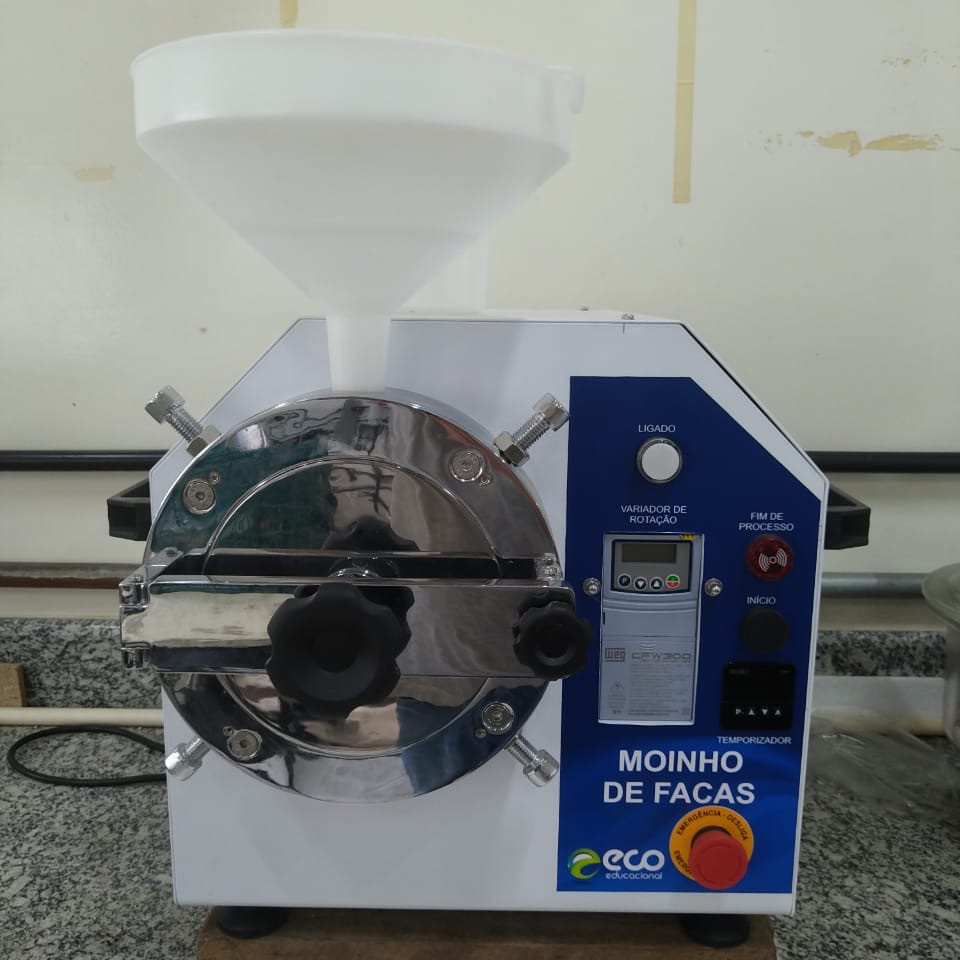
Knife Mill
The knife mill is used to reduce the size of solid particles through the action of high-speed rotating blades. This process is essential for sample preparation, ensuring an appropriate particle size distribution for subsequent analyses or for use in different unit operations. The equipment is widely applied in the processing of biomass, food products, polymers, and other materials, contributing to particle homogenization and increasing the surface area of the particles.
3D Printer
3D printing enables the fabrication of three-dimensional objects from digital models through the controlled deposition of material in successive layers. In the laboratory, it is a versatile tool for creating prototypes, experimental devices, customized supports, and made-to-measure parts. Its use contributes to faster project development, reduced costs, and greater autonomy in the production of specific components, allowing for the rapid testing of new ideas and solutions.
Convective Dryer
The convective dryer is used to remove moisture from materials through the circulation of heated air, promoting simultaneous heat and mass transfer. This equipment allows the evaluation of drying kinetics, thermal behavior, and physical characteristics of materials during the process. It is widely employed in studies involving food, agricultural products, biomaterials, and particulate systems, and is essential for the development and optimization of industrial drying processes.

Adsorption Column
The adsorption column is used to study separation and purification processes based on the interaction between a fluid and a solid adsorbent. In this system, compounds present in the liquid or gas phase are retained on the surface of the solid material, allowing their removal or recovery. The equipment enables the analysis of breakthrough curves, adsorption capacity, and process efficiency, and is widely applied in wastewater treatment, substance purification, and industrial processes.
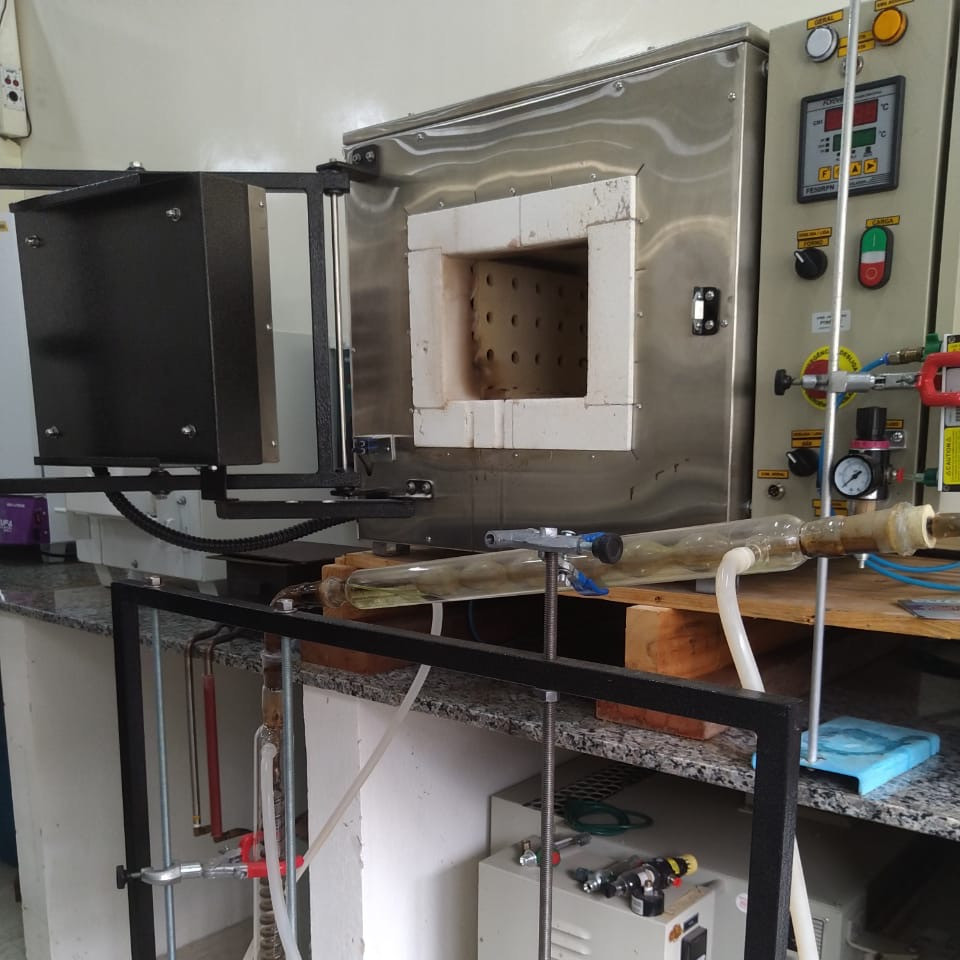
Gas and Vacuum Pyrolysis Furnace
This furnace is designed to perform pyrolysis processes, in which materials are subjected to high temperatures in a controlled atmosphere with little or no oxygen. The ability to operate with inert gas and under vacuum allows precise control of experimental conditions, enabling studies on thermal decomposition, as well as the production of biochar, bio-oil, and combustible gases. It is a fundamental piece of equipment in research related to biomass conversion, waste treatment, and the development of new materials.
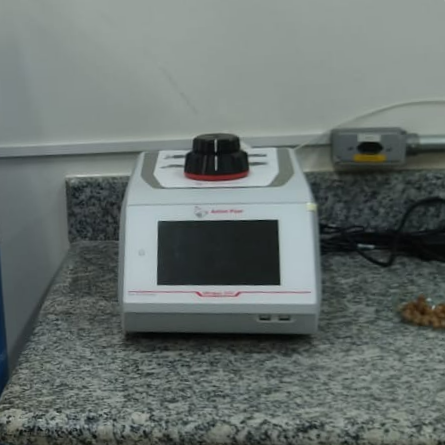
Gas Pycnometer
The gas pycnometer is a high-precision instrument used to determine the true density (or real density) of solid materials, especially powders, granules, and porous materials. Its operation is based on the displacement of an inert gas, typically helium, which penetrates the accessible pores of the material, allowing extremely precise volume measurements. This type of analysis is essential for the physical characterization of materials and is widely applied in scientific research, quality control, and the development of new products such as catalysts, biomaterials, and particulate materials.